
Colonialism takes many forms.
It first came to Hawai’i in the late 1700s by sea, aboard tall-masted ships carrying missionaries, surveyor’s transits, inventory legers, whaling harpoons, and firearms. In general, its worldview was as simple as it was greedy: if the people of a land didn’t map it, deed it, or fence it in a way Europeans or Americans respected or recognized, then that land was terra nullius—nobody’s country. Free, for the taking.
The tools and means of colonialism would adapt to the times. Colonizers don't use longrifles anymore. In 2026, they send User Agreements. The mechanisms of control evolved with the technology of the era, but the core logic of the purpose never changed all that much. It’s even been uploaded to the cloud.
Nick Couldry, Professor of Media, Communications and Social Theory at the London School of Economics, coined the term data colonialism to portray how Big Tech values the meta data and personal information that regular people incidentally generate on a daily basis. Essentially, they treat our lives in similar ways to how 19th century empires once treated their overseas colonies: as wilderness to be tamed, claimed, mined, developed, and–ultimately–converted into wealth. This time, the commodity isn't sandalwood, sugarcane, or rubber. It’s us. Or, at least it’s a lot of us—nearly all of us, everywhere. We are the raw material—our living pulse on a smartwatch, our incidental conversations within earshot of a digital voice assistant, our family trees, our lingo and buzzwords, and the exact route our phones travel when we make our morning commute.
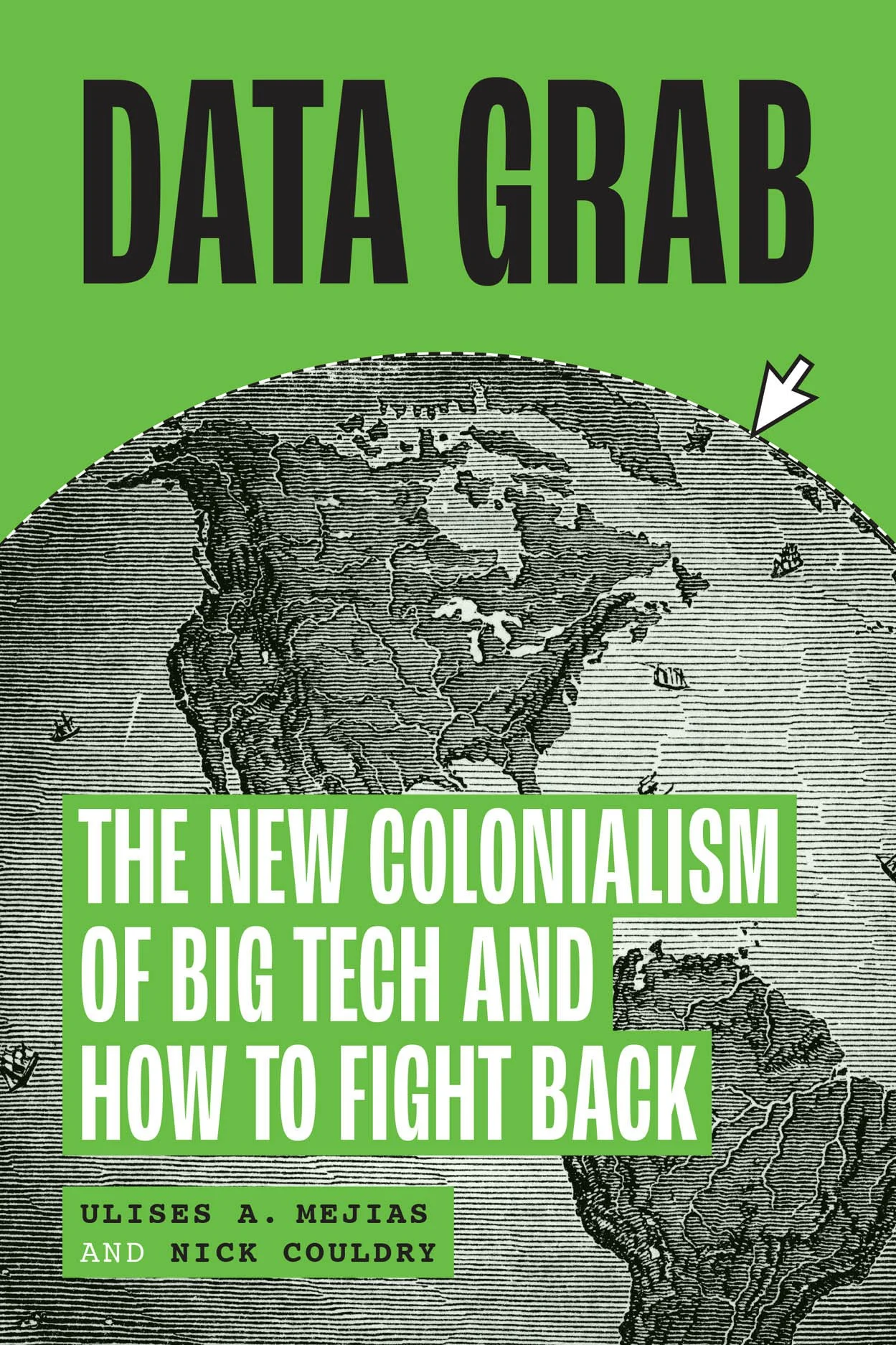
To make this intrusion feel somewhat acceptable, Silicon Valley relies on a trick of rhetoric and terminology. They’ll refer to our data as “exhaust”, or they’ll talk about "mining" personal info from the digital ether–like it’s a deposit of iron ore in a mountain. What gets lost in translation is no less than an intimate and personal reflection of humanity itself, albeit in a digital format. In exchange, we are provided flashy digital devices (that we’re prevented from personally repairing, or owning outrightly) and intuitive digital services at a premium price, customized to our every inane preference and whim—navigation apps that help us avoid traffic, photo-sharing feeds reminding us of the recent past, and real-time video calls from half a world away. At the heart of this complicated dynamic rests a pernicious threat: give up some or most of your personal privacy and behavioral autonomy, or risk being effectively locked out of modern 21st-century life.
For most of the world, the implicit unfairness of the dynamic is something of a disorienting first experience. For the Native Hawaiian community, the storyline is an all-too-familiar case of déjà vu. Kānaka Maoli have seen this kind of thing happen before, have been made economic victims because of it, and have spent generations dealing with its fallout.
./:Mahele v2.01
Hawaiian history already contains vivid examples of what happens when a communal, relationship-based understanding of shared resources runs into an foreign legal regime designed for extraction. In 1848, the Māhele radically restructured traditional land tenure in Hawai’i. A nuanced, customary system rooted in stewardship—where land (ʻāina) was not a commodity to be bought and sold, but a living relative to be cared for—was reformatted into Western private property deeds. In a matter of decades, vast hectares of ancestral territory had slipped into private estates or corporate control, laying much of the groundwork for the 1893 overthrow of the Hawaiian Kingdom.
Data colonialism is the digital revival of that very same capitalistic trick.
Consider ʻōlelo Hawaiʻi, the indigenous language of Hawai’i: Thanks to early high literacy rates across the Hawaiian Kingdom, Hawaiʻi hosts one of the largest indigenous-language historical archives on the planet: over 125,000 pages of 19th- and early 20th-century Hawaiian newspapers (nūpepa). For decades, scholars, community elders, and grassroots language preservationists labored to rescue, digitize, and transcribe these papers from decaying microfilm. They salvaged genealogies, legal scholarship, weather reports, and volumes of priceless literature and mythology.
In the early days of AI, Big Tech deployed web scrapers to absorb these publicly available archives. With frightening efficiency, these scraping programs raked up centuries of cultural knowledge to train each AI company’s large language models. At no point were Hawaiian cultural practitioners asked whether their sacred chants (mele) or sensitive family lineages (moʻokūʻauhau) even ought to be digested by commercial algorithms. At no point were native Hawaiians compensated for what Big Tech took without asking.
The immediate result is both insulting and predictable. Tech companies repackage Hawaiian cultural heritage into translation apps that warp the poetry and subtlety (kaona), ignore regional dialects, and arbitrarily standardize vocabulary and grammar. They will then license those apps to schools, businesses, and community programs. The outcome is a form of cultural sanitization, accompanied by a polite but soulless marketing email about advances in "free translation".
The intellectual extraction doesn’t stop at language; it touches every meaningful feature within a culture. Traditional ecological knowledge—the intricate, localized science that built fishpond complexes (loko iʻa) and managed watershed resources from mountain to ocean (ahupuaʻa)—is increasingly entered and incorporated into proprietary geographic databases and environmental software. In medicine, Pacific Islander communities possessing unique genetic histories occasionally discover themselves being targeted by outside biomedical researchers, eager for DNA samples. Western copyright and patent laws declare this collective, intergenerational heritage "public domain," while the commercial therapeutics and patented seed strains derived from it stay firmly locked behind subscription plans and private corporate paywalls. Even public health statistics have been weaponized. For decades, US federal reporting lumped Native Hawaiians into the monolithic AAPI category. Conflating Polynesians with East and Southeast Asians effectively obscured noticeable local disparities in chronic disease, housing insecurity, and poverty. When data is disaggregated, outside institutions almost exclusively produce "deficit narratives"—studies counting failures, illnesses, and social crises, while effectively ignoring examples of community resilience, social adaptation, cultural vitality, or contributing systemic causes.
Enter The Art of Digital Self-Defense
Despite the grim state of affairs, all hope is not lost. Indigenous people the world over are not waiting idly for an incidental miracle, or a savior; they’re getting proactive. Powerful protests and counter-actions against data colonialism are coalescing into a movement called Indigenous Data Governance. The movement is taking root across Pasifika and the world, proving that cultural autonomy–even those housed within digital spaces–can be reclaimed.
Building real digital self-defense means defining the rules of engagement. The real force within the defense begins with a paradigm shift in governance standards. In recent years, Big Tech abides by a set of “principles” it calls F.A.I.R.—ensuring data is Findable, Accessible, Interoperable, and Reusable. It sounds reasonable–even progressive. In practice, FAIR simply means "easy for AI scraper programs to consume”. Indigenous scholars and data activists pushed back by establishing the CARE Principles:
Collective Benefit: Data ecosystems must actually serve the community's health, education, and self-determination—not pad quarterly earnings elsewhere.
Authority to Control: Indigenous people retain the moral and practical right to determine how their data is gathered, who accesses it, and when the door stays shut.
Responsibility: Anyone working with community data must nurture reciprocal relationships and invest in local infrastructure rather than treating the islands as an academic safari.
Ethics: Harm prevention and cultural respect take precedence over institutional curiosity.
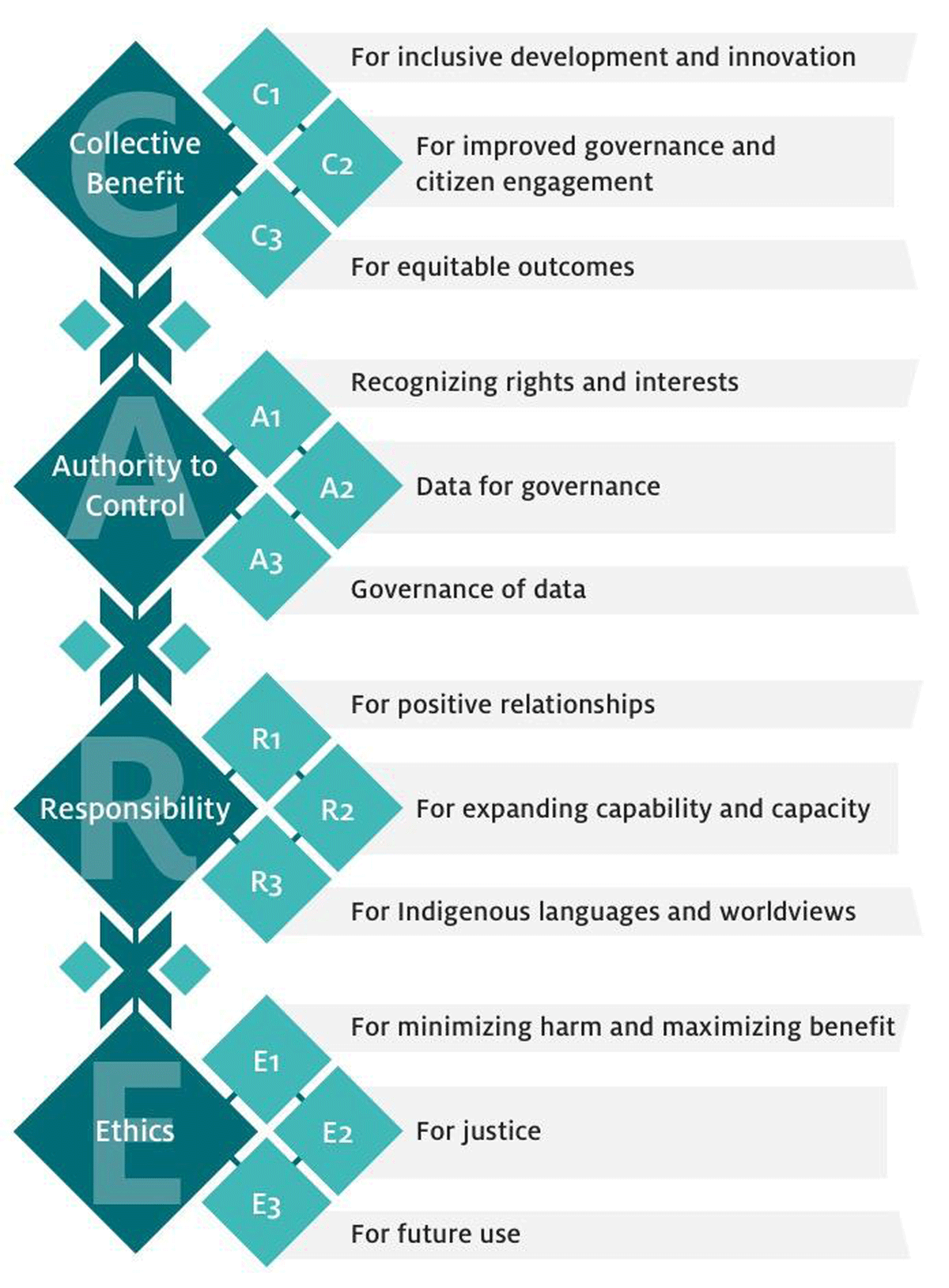
When major community players and organizations—county governments, non-profits, trusts, immersion school networks, and local universities—refuse to sign grants or cloud contracts unless CARE standards are met, the balance of power shifts.
Beyond administrative principles, improved legal and technical firewalls are on the horizon. Traditional watchdogs—like university ethics boards—tend to check simple boxes around individual privacy while missing broader community harm entirely. Instead of relying on them, community-run review boards and independent data trusts are rising to fill the needs the old watchdogs don’t meet. If let’s say a pharmaceutical conglomerate in Canada wants to study Hawaiian plant-based therapeutics or local genomics, they wouldn't just get carte blanche; they must answer to community trustees who dictate terms, prohibit commercial AI hoarding, and guarantee that any benefits flow to the people who live the culture.
There’s also something known as Local Contexts Traditional Knowledge (TK) and Biocultural Labels helping native communities enforce their intellectual property rights. Copyright in the Western world tends to protect a creator for a limited number of years, then throws much of their work into the public commons. Copyright was never designed for protecting culturally sacred, collective knowledge handed down across countless generations. TK Labels solves for this by embedding digital provenance tags right into the metadata of sound files, museum collections, and research archives. These tags clearly indicate whether a chant is open for general educational use, restricted to specific families, or meant strictly for seasonal ceremonies. TK Labels extend cultural etiquette and community-enforced protocols to digital files.
Ultimately, the best defense against extractive digital infrastructure is to create one’s own. Instead of leaving historic texts out in the digital wide open for commercial AI models to devour, communities are beginning to host archives behind private, authenticated gateways. Instead of relying on generic corporate translation engines, educators and technologists are exploring locally-hosted, open-weights models trained on their own terms—machines that can understand the difference between everyday speech and sacred metaphor without leaking private records onto public servers.
The challenge of data colonialism is very real, and very risky, but it carries a genuine opportunity. By treating data not as an abstract commodity, but as a digital extension of ea—something living that demands intentional participation, stewardship, and collective responsibility—the Native Hawaiian community isn't just shielding itself from Big Tech’s overreach. It is showing the rest of the connected world how to treat human experience with the dignity it deserves.
