
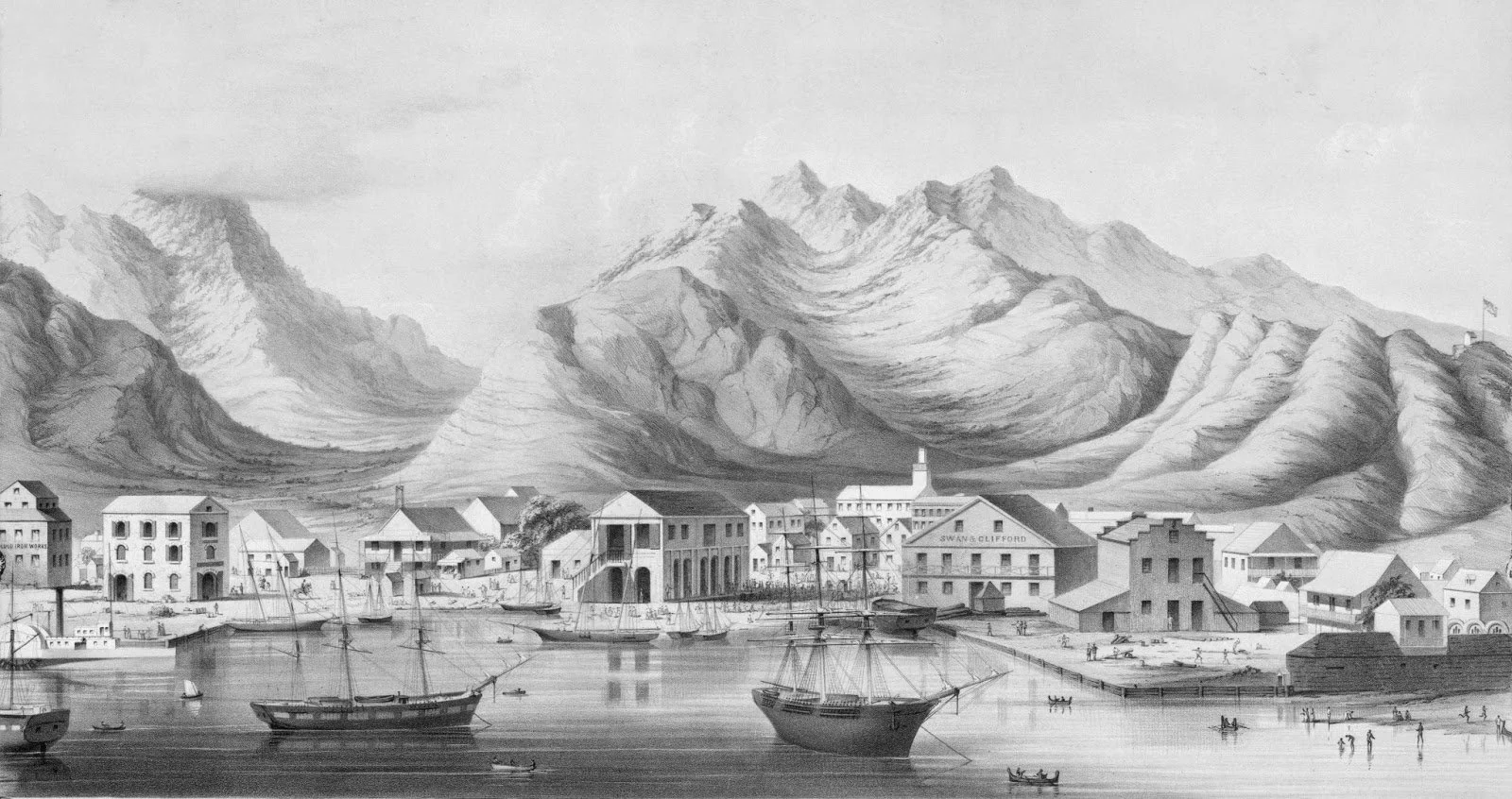
“No. 1. View of Honolulu. From the Harbor” by Paul Emmert, drawn on stone by lithographer George Henry Burgess; 1854
At the start of college, freshman Econ students are usually treated to comforting fairy tales about supply and demand. They’ll read Smith, Keynes, and Friedman, and learn about invisible hands, rational actors, and the odd ways markets reach a harmonious equilibrium. If people want stuff, producers will make it - and in mass quantities. If houses get too expensive downtown, developers break ground on a suburb ten miles out. New roads get paved, people buy cars, and the housing market smiles with relief as supply catches up with demand.
On a sprawling continent like Asia or North America, these ideas work (not perfectly, but just well enough). But as soon as these ideas are applied to an island, many of the basic lessons and theories begin to lose touch with reality.
The invisible hand doesn’t balance needs and resources on an island; it acts more like a high-stakes bouncer at a trendy night spot, welcoming VIPs while steadily moving the working people toward the back exit. Those who have to make their living on an island know the feeling all too well: working forty, fifty, or sixty hours a week, doing everything society asks of you, yet somehow never getting ahead. Working class checking accounts seem to be slowly running out, while foreign investors keep buying up large tracts of open land for their third vacation home.
Why does this happen? Are islands economically cursed? The short answer is no, but it’s complicated.
Islands don't just suffer from inequality; their global geography seems to magnify every flaw of modern capitalism. Understanding why this happens—and figuring out what to do about it without waiting in vain for some divine intervention—requires throwing out the continental rulebook and looking at the unusual and particular way that island economies actually work.
Unless You’re a Volcano, Land Can’t Just "Be Made"
The most obvious physical limitation of islands are also what makes it so alluring to call them home: they’re cut off, isolated by water, which makes living there full-time a rarified experience.
On a continent, the availability of land is taken for granted. Economists describe it as elastic. If, let’s say, the cost of living in Los Angeles or suburban Atlanta skyrockets, you can pack up your life and relocate it not very far away without fundamentally changing the majority of your personal lifestyle. It may lengthen the daily commute, or change up the daily routine. But the room to go elsewhere, anywhere, wherever you like - that option exists on a continent. Markets love continents, because they can absorb and theoretically sustain the sprawl. Afterall, there’s always undeveloped land somewhere just outside of town, no matter which town you choose.
On an island, land is a finite resource limited by the forces of nature. The ocean cares nothing for population densities or municipal housing targets; if you live on an island only a few miles across, then that is the extent of the land you will ever have to work with.
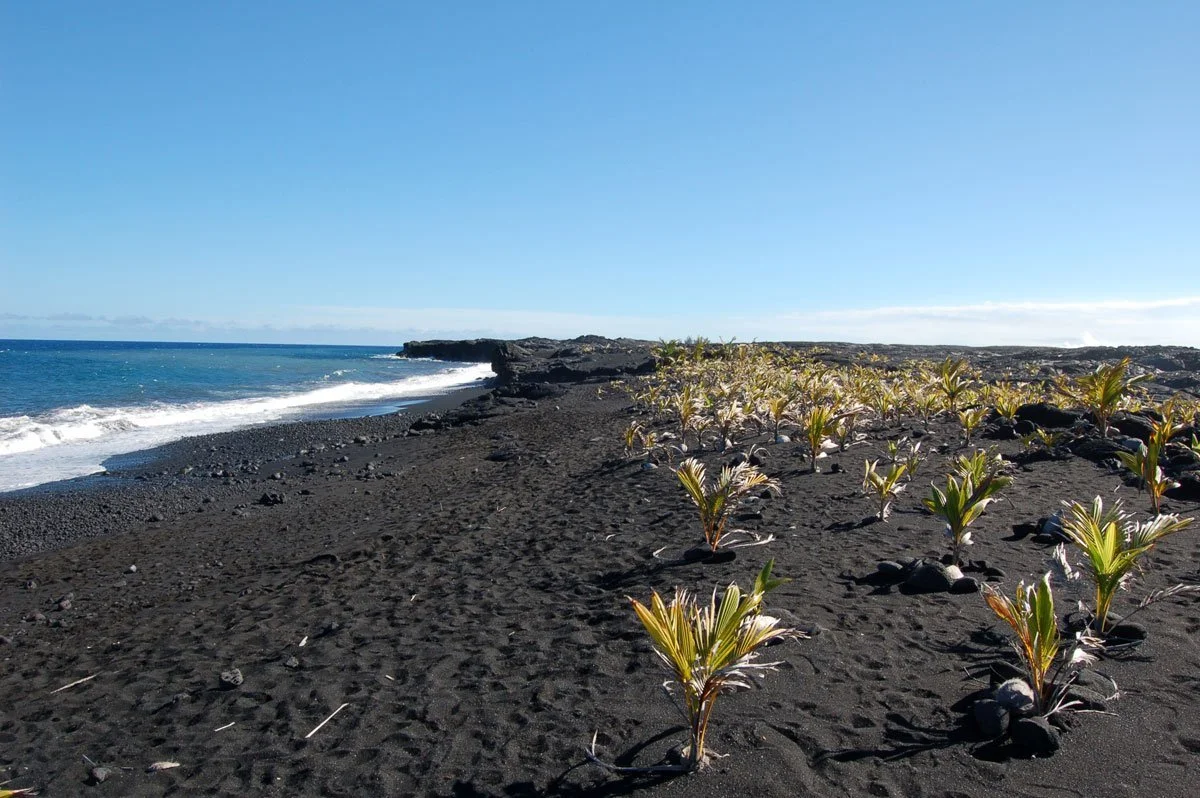
Black sand beach at Kalapana, Hawai’i Island
In today’s hyper-connected world, the people of an island aren’t just competing against themselves. They are, effectively, competing against the accumulated influence and capital of the entire world. A small unimproved lot on a scenic coastline is no longer priced according to what a locally-born schoolteacher, nurse, or carpenter could afford on their wages. Instead, it’s priced according to what a hedge fund manager, or a senior administrator, or a retiree from Greenwich, Connecticut thinks it could be worth.
When the supply of housing or developable land tops out, but outside demand for what’s left never ends, then the land stops being treated like a basic human need and starts to be treated like a scarce, tradeable asset—like fine art, vintage watches, or classic sports cars.
To those who already have substantial wealth, it’s like living the dream. They simply have to sit on their property, sip plantation iced tea on the lanai, and watch their net worth appreciate by double digits year after year. Using ample wealth to snatch up desirable island real estate completely preempts the need to produce anything of value to the island or its community.
For everyone else, this dynamic is economically catastrophic. When land prices surge, rent surges with them. Economists call it rent-seeking. It’s a type of involuntary wealth extraction. Every month, a massive chunk of the working class’s paychecks (in the form of a living expense) gets funneled straight into the pockets of the wealthy asset-owning class (i.e. a rent check going to a well-off landlord). It isn't being reinvested in local manufacturing, building improvements, technology upgrades, new research labs, or better community schools; it is simply being captured and used to increase the wealth of those who are already richer than most.
On the continent, you can run away from high rents by moving to the next town. On an island, moving away involves the expense of buying a plane ticket, packing your life into luggage and boxes, and abandoning your ancestral home.
The Perpetual Punishment of the Freight Premium
If land and rents are the anchors weighing down island residents, then the retail cost of goods and grocery bills are a rising flood that drowns everyone.
Freight networks are the lifeblood of most countries. They operate so efficiently that most people barely notice them, or pay them a second thought. When corn travels by train across the Midwest, or when an eighteen-wheeler brings a crop of strawberries down an interstate highway, the marginal cost per item is economically tiny. There are multiple ports, parallel rail lines, competing trucking firms, and domestic fuel pipelines all keeping transport costs low.
An island has none of that.
Unless your island home happens to sit directly atop an oil deposit and possesses thousands of acres of fertile, fully-developed farmland, nearly every single thing required to keep human beings alive has to be loaded onto a ship or an airplane, hauled across thousands of miles of open water, unloaded with specialized heavy machinery, and trucked to a retail shelf. This includes everything from extravagant luxury goods to necessities like eggs, milk, toilet paper. It also includes the steel rebar holding up the apartment building next door, the fresh asphalt the county needs to pave their pothole roads, and the petroleum running the power plant keeping people’s refrigerator cold.
This reality introduces something called a freight premium—an all but permanent, non-negotiable surcharge, baked into the cost of living on an island. Freight premiums are deeply regressive.
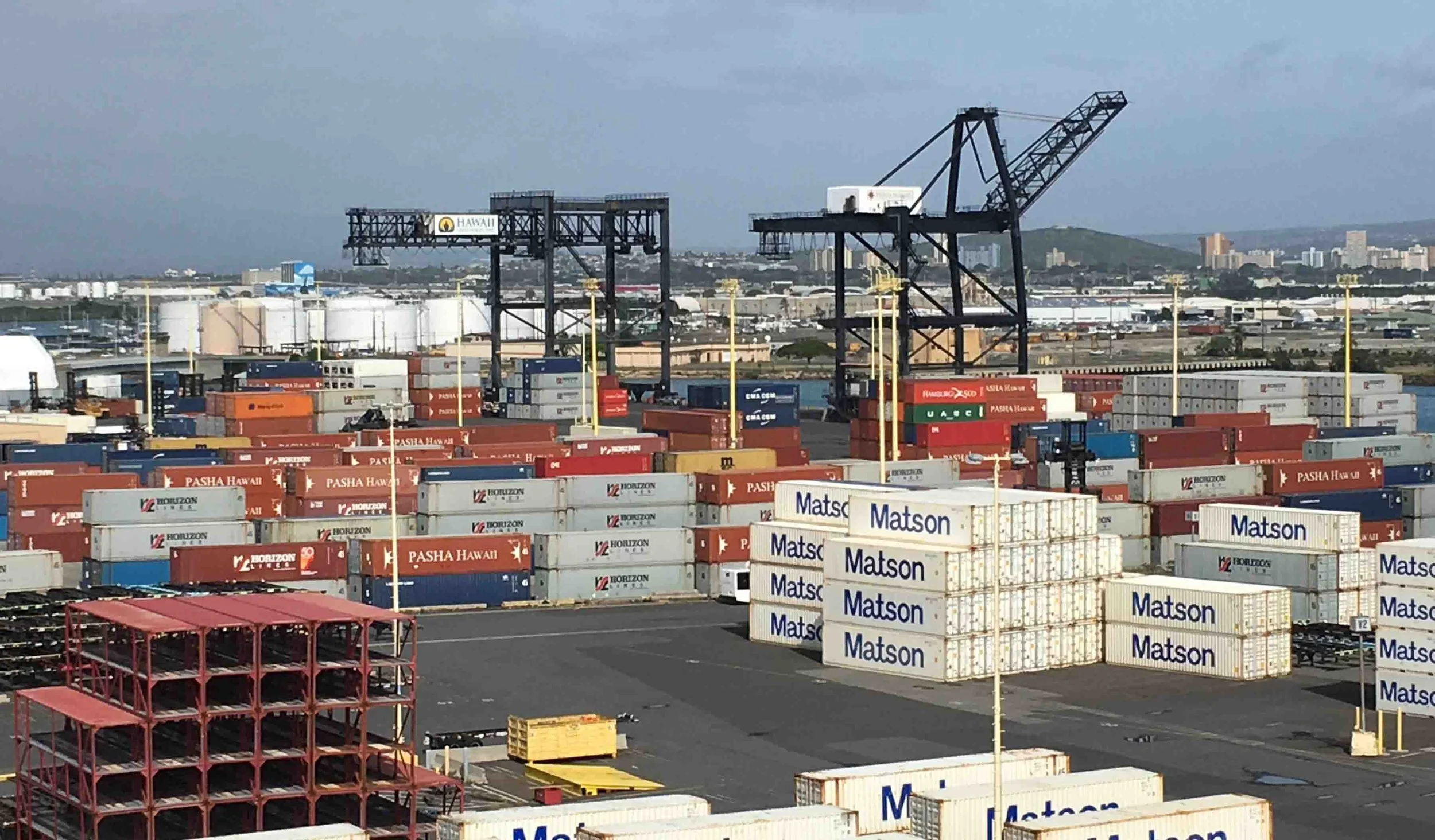
Honolulu Harbor, O’ahu
Regressive costs are expenses that harm the poor far harder than they do to the rich. If a gallon of milk costs eight dollars instead of three dollars, a high-earning corporate executive barely notices the five-dollar difference. But for a short-order cook supporting a family of four, that five-dollars–multiplied across an entire grocery cart, week after week—is the difference between having some emergency savings and teetering on the edge of crippling debt.
Additionally, shipping goods across major bodies of water is rife with logistical risks and regulatory capture. In the US, for example, island jurisdictions are hopelessly bound to maritime laws like the Jones Act - a century-old law stating that any cargo shipped between two U.S. ports must be carried on ships that are built, owned, and flagged in the United States, and crewed by U.S. citizens.
The circumstances which gave rise to that policy back in 1920 were born out of the aftermath of World War I. Since then, it’s become modern economic burden to places like Hawai’i, Puerto Rico, Samoa, and Guam: it shrinks the pool of available ships, locks out international maritime competition, and drives shipping rates through the roof.
Monoculture & the Hourglass Job Market
So what kind of economy actually thrives on an island?
If you want to build a thriving manufacturing industry, you need cheap land, low energy costs, easy access to raw materials, and cheap freight to get your finished products to consumers. Islands offer the polar opposite, in nearly every respect. They have expensive land, sky-high energy costs, virtually no raw materials, and exorbitant shipping. Mass manufacturing is a poor fit for an island.
What about international finance hubs, or multi-national corporate headquarters? Unless an island sets itself up as a secretive offshore tax shelter (a strategy with its own toxic ethical and economic side effects), it lacks the sprawling corporate ecosystems, deep specialized labor pools, and agglomeration benefits found in major venues like London, Tokyo, or New York. For these reasons, finance and corporate HQs are also a poor fit.
Inevitably, most islands default to the one thing they possess that most continental countries do not: extraordinary, sun-drenched, postcard-perfect natural beauty. To capitalize on the better weather, nicer scenery, and picturesque beaches, many islands build their economies on a foundation of tourism. Tourism can provide a phenomenal boost to island economies. But as a long-term foundation for a stable, equitable society, tourism is deeply flawed. Tourism produces what economists call an hourglass economy.
At the very top of the hourglass, you have a highly-compensated tier: the regional vice presidents, hotel executives, real estate developers, commercial lawyers, administrators, and financial managers. At the bottom of the hourglass, you have a vast, sprawling base of low-wage, non-tradable service jobs: housekeepers, bellhops, line cooks, tour bus drivers, bartenders, towel boys, and retail clerks. What’s missing is the middle: there are only a handful of well-compensated, stable, mid-tier industrial, technical, or research careers.
When an entire economy becomes reliant upon a single economic industry, it grows fragile. A hurricane, a pandemic, a spike in global jet-fuel prices, or a sudden recession can annihilate an island's single source of external revenue. Yet, that island’s cost of living will remain stubbornly expensive. Low hotel occupancy rates and low visitor arrivals doesn’t mean that the debt service on real estate and the cost of shipping food across the ocean takes a vacation.
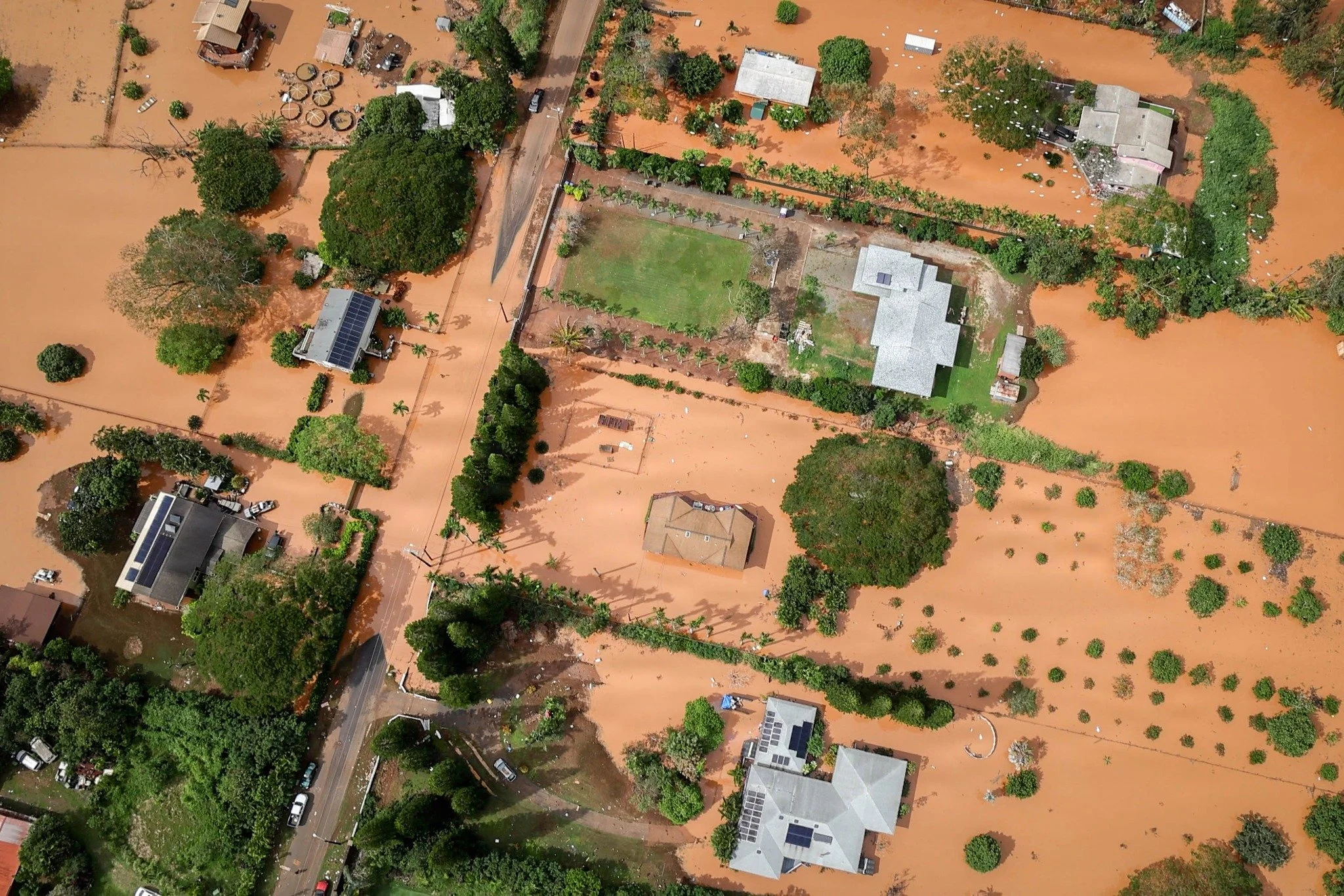
Flood damage in Waialua, O’ahu during the March Kona Low storms; photo credit: U.S. Army photo by Sgt. Olivia Cowart
The Trap: Captive Consumers and Stranded Labor
Mainland economists assume that if a business treats its customers poorly or charges outrageous prices, a competitor will pop up across the street to undercut them. They also assume that if an employer pays miserable wages, workers will pack up and find a better job in the next town.
On islands, both of these assumptions tend to fall apart.
Because island markets are small and isolated, they usually cannot support a wide array of competition. Every aspect of, say, setting up a major distribution network—buying container ships, building cold-storage warehouses, securing scarce commercial land—requires a tremendous amount of money to keep running. If a company does in fact manage to clear these hurdles, they effectively own a significant part of the market. On islands, these conditions lead to natural geographic monopolies and oligopolies. A single local shipping company, one or two major grocery distributors, a lone electric utility, and a handful of legacy commercial banks wind up controlling most or all of the economic essentials of daily life.
With no external competitors knocking at the door, these legacy firms wield enormous pricing power. They don't have to shamelessly price-gouge to tilt the board; they simply have zero incentive to pass efficiencies down to the consumer. The consumer surplus—the economic term for the value everyday people get when businesses compete to offer better prices—evaporates. That surplus gets funneled directly into the balance sheets of a tight circle of well-capitalized local corporations.
Now consider the workers. On a continent, labor mobility is relatively fluid. If someone loses their job in Cleveland, they can drive their twenty-year-old sedan to Columbus, crash with a friend for a week on their couch, and revitalize their career potential with a new round of interviews in a totally new job market. On continents, the friction of moving is low.
On islands, the ocean is effectively a moat. Leaving an island requires thousands of dollars in airfare, container shipping for your belongings, and the complete severance of your community and family support networks. For high-earning professionals with specialized degrees, that barrier is arguably easier to clear. But, not for everyone else. In fact, islands suffer from chronic, devastating brain drain, as the most educated young people realize they can earn double the salary at half the cost of living by heading to California, Nevada, or Arizona.
For the working poor, however, that geographic moat becomes an economic prison. For those living paycheck to paycheck, struggling to cover rent and groceries, you simply do not possess the readily-available capital needed to relocate. Economically, you are stuck. You can barely live, but you also cannot afford to leave. So, you have no choice but to accept whatever the local service-sector labor market is willing to pay. Over generations, this calcifies economic stratification into an almost feudal divide: a mobile, asset-owning elite at the top, and an immobile, wage-dependent working class at the bottom.
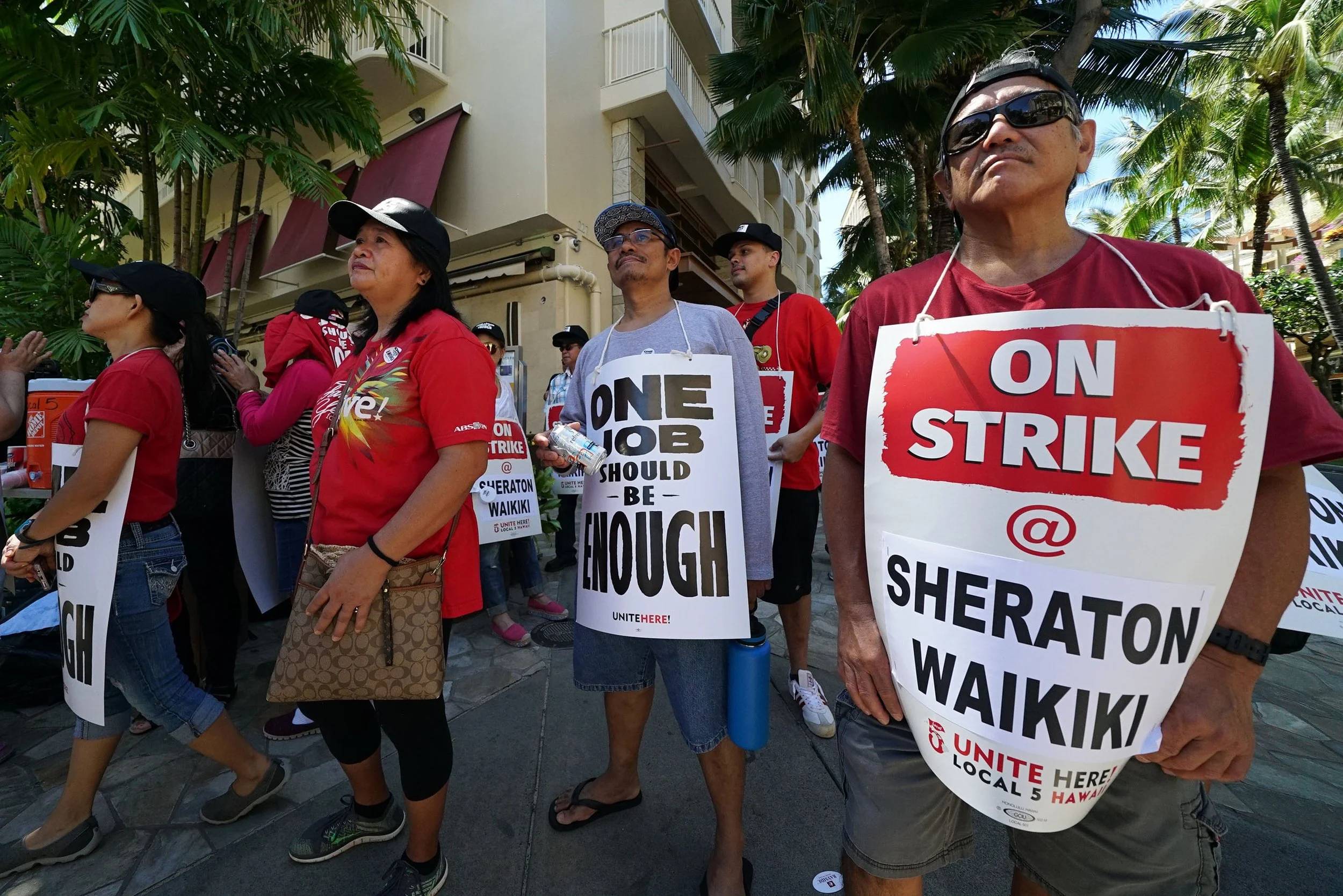
Labor strike in Waikiki; photo credit: Cory Lum of Civil Beat; 2018
Sovereignty: How Independent Islands Win
So, are islands simply doomed to be places where underpaid labor is expected to subsidize the sunlit vacations of celebrities, influencers, and the ultra-wealthy?
Not necessarily.
Around the world, some island communities have considered these challenges honestly and successfully beaten them back. But they did not succeed by playing according to the continent’s rules. They did it by abandoning the myth of the unfettered free market and leaning aggressively into strong public intervention, non-market land controls, and radical economic decoupling.
Singapore: Dividing Shelter from Speculation
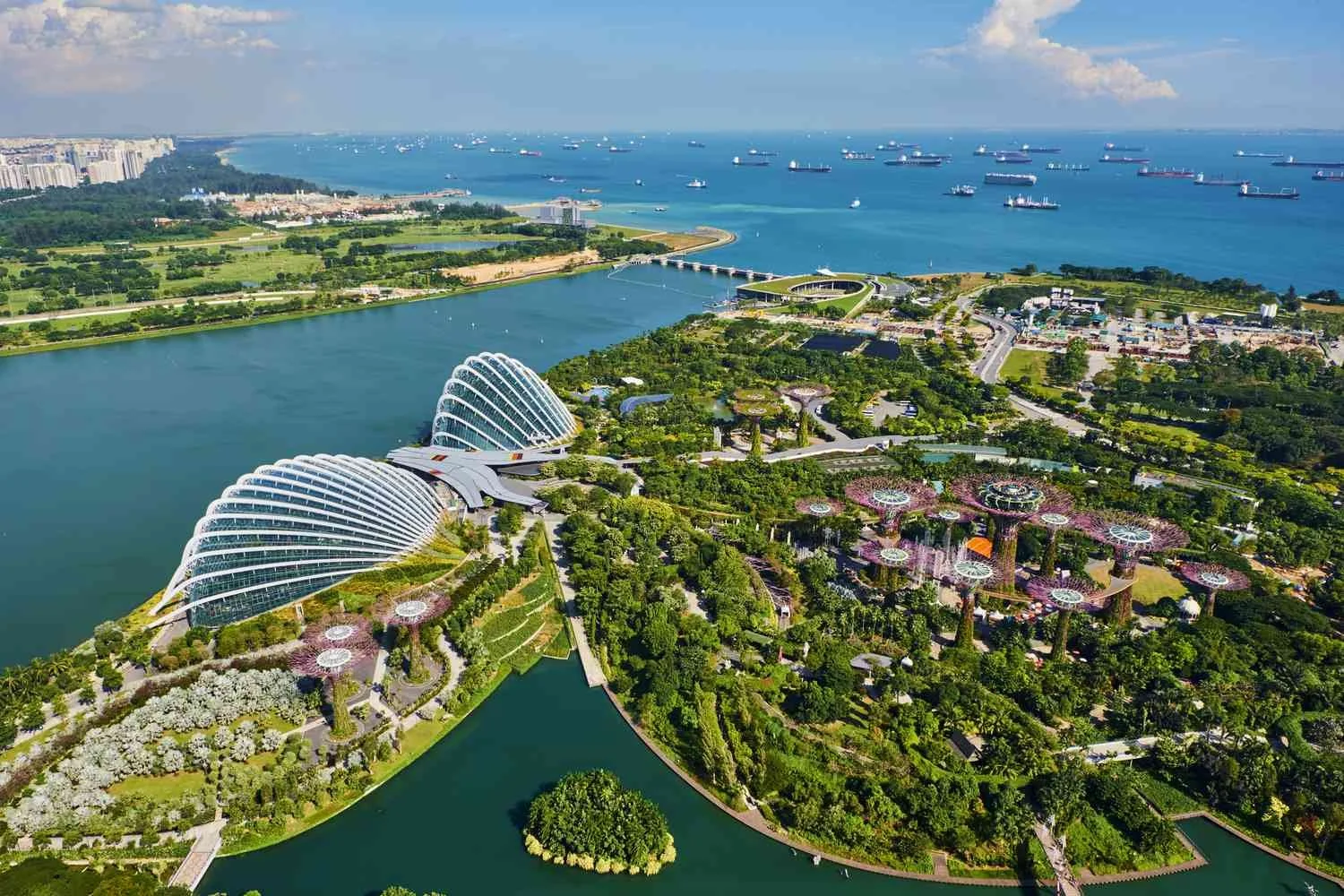
Singapore is a tiny, hyper-dense island nation surrounded by massive global trade currents. Left to pure market forces, it should be the most unaffordable, deeply unequal patch of real estate on the planet. Instead, it boasts one of the highest homeownership rates in the world, alongside an exceptionally broad, stable middle class. How did they do it? Through the Housing & Development Board (HDB).
In the mid-20th century, the Singaporean state recognized that private land ownership on an island was a recipe for social collapse. Today, the state owns roughly 90% of the land. It builds modern, master-planned high-rise apartments and sells them to citizens on 99-year leaseholds.
Crucially, these homes are traded within a legally firewalled, highly regulated secondary market. To buy an HDB flat, you must be a citizen, you face strict income ceilings, and you can only own one at a time. Speculators cannot buy them. Offshore capital funds cannot buy them. The private, global real estate market is strictly quarantined to a luxury tier, where foreign billionaires can bid against each other to their hearts' content, while the working domestic population lives in state-secured, permanently affordable housing.
The Åland Islands: Empowering the Local Veto
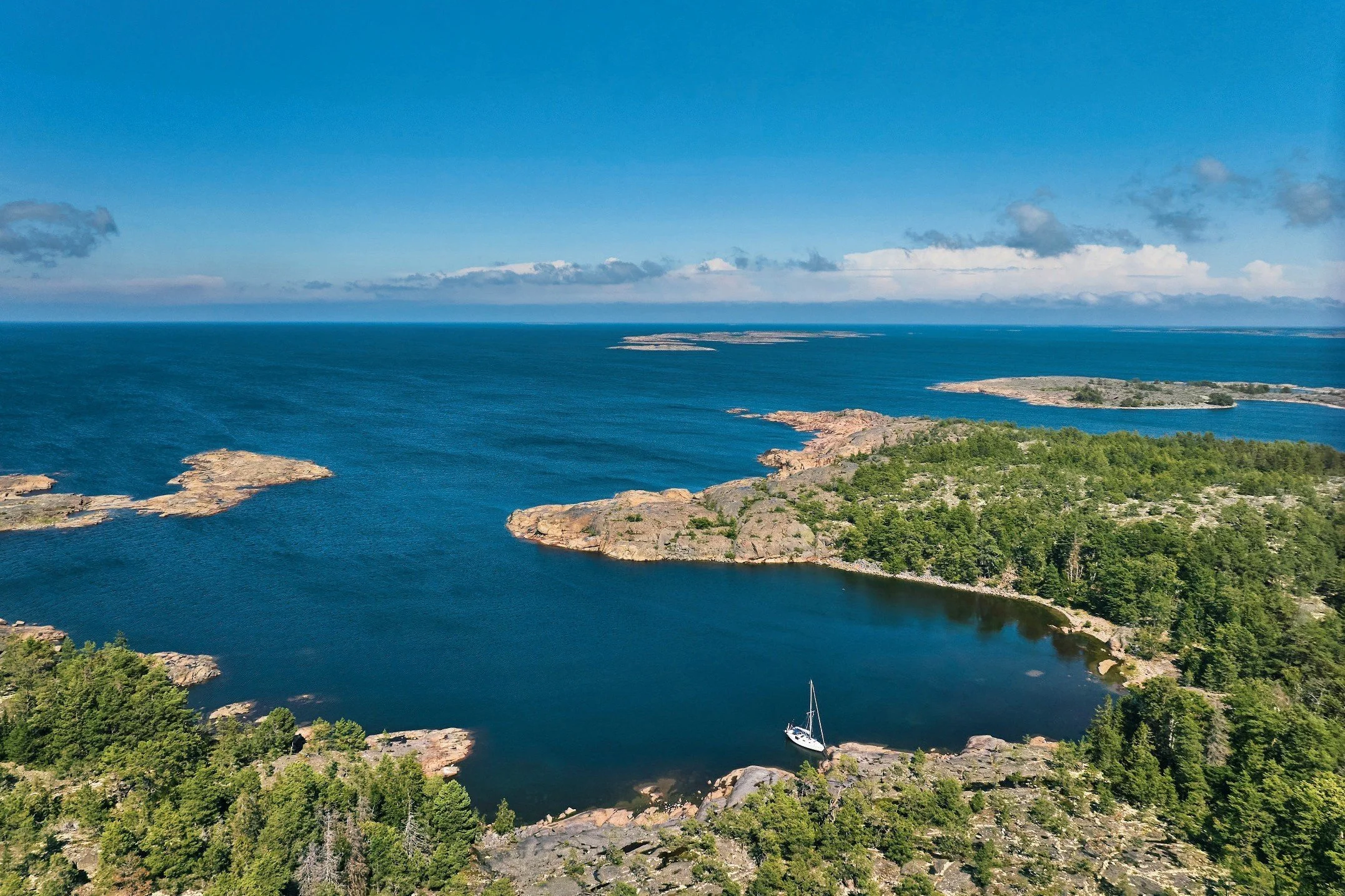
Tucked between Sweden and Finland, the Åland Islands are an autonomous, Swedish-speaking province of Finland. Their stunning archipelagos have been lusted over for decades by wealthy mainland Europeans, looking for their next private summer villa. Yet, the Åland maintains a legal concept known as hembygdsrätt—regional citizenship.
Under this legal framework, you cannot simply buy real estate or open a business on the islands just because you have the money. You must hold regional citizenship, which requires continuous residency and language proficiency, or secure special permission from the local government.
By creating a legal barrier between outside speculative capital and domestic physical land, Åland kept its property values aligned with local earning power, preserving its community and economic stability.
Iceland: Resource Dividends and Strong Collective Bargaining
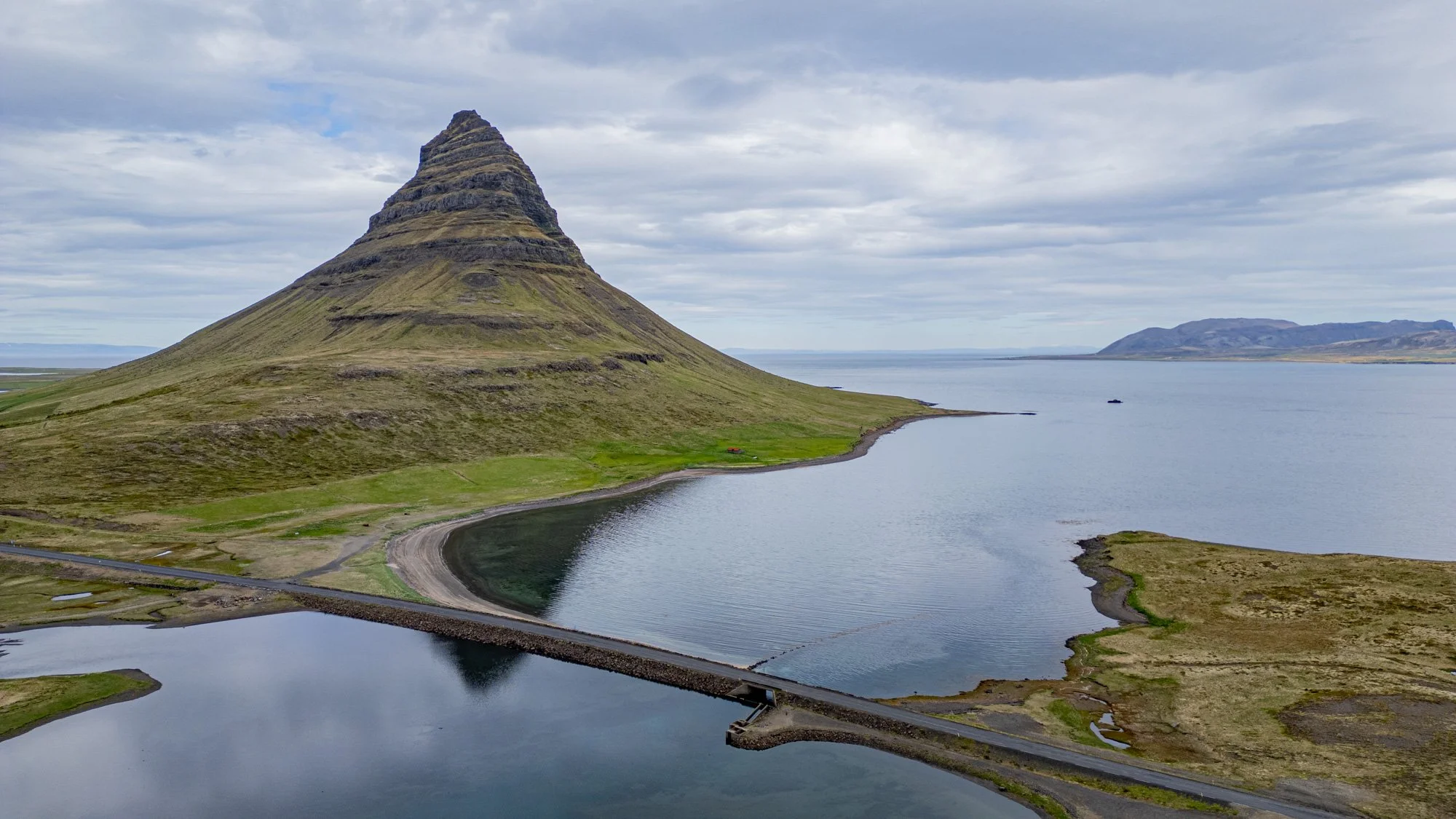
Iceland operates in one of the most hostile geographic environments imaginable: a volcanic rock in the North Atlantic with almost no indigenous agriculture. Yet, Iceland consistently ranks among the most egalitarian societies on Earth. They achieved this through two pillars: capturing natural resource rents for the public, and maintaining an exceptionally high rate of union density.
Rather than letting private multinational corporations capture their geothermal energy and marine fisheries, the Icelandic state retained ownership and strict regulatory control over these assets, ensuring the economic rents flow back into high-quality public infrastructure, universal healthcare, and free higher education. Meanwhile, broad tripartite wage pacts between labor unions, employers, and the government ensure that the service-sector wage floor dynamically adjusts to the actual cost of living. There are no "working poor" scraping by on sub-survival wages while luxury resorts rake in record profits.
The common denominator among Singapore, Åland, and Iceland is clear: they used their sovereign power to say no to the outside market. They used borders, residency restrictions, state land ownership, and legal firewalls to insulate their vulnerable internal economies from invasive and external wealth shocks.
Hawai’i: The Sub-National Trap
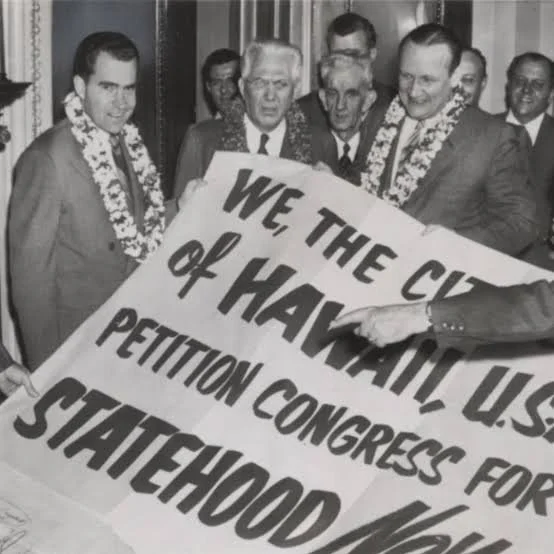
Vice President Richard Nixon (far left) receiving the massive "Statehood Honor Roll" petition in Washington, D.C., alongside Senate Majority Leader William Knowland (far right), Territorial Governor Samuel Wilder King, and delegate representatives; AP Wirephoto, February 26, 1954;
Arguably, the hardest problem in island economics is the sub-national island. What happens when an island faces all the geographic bottlenecks of an isolated territory, but enjoys none of the sovereign tools used by fellow islands like Singapore or Iceland?
Welcome to Hawaiʻi.
Hawaiʻi is arguably the clearest, most heartbreaking example of just how damaging and incompatible mainland economic strategies are to island economies: it is the most isolated population center on the planet, thousands of miles away from any major continental landmass; it imports upwards of 85% to 90% of its food; it brings in oil on tankers to fuel its electricity; and it contends with all the typical economic drawbacks that come with fixed, rugged, volcanic land isolated by water.
By all practical measures, Hawaiʻi is an extreme island economy. But politically, Hawaiʻi is merely the 50th state of the United States. That structural mismatch is an economic trap.
Because Hawaiʻi is bound by the U.S. Constitution, its state and county governments are legally barred from using the most effective tools in the island playbook:
Because of the Interstate Commerce Clause and the Privileges and Immunities Clause, Hawai’i cannot legally stop the ultra-wealthy in California, New York, or Texas from buying up residential neighborhoods on Maui or Oʻahu. The state cannot impose residency restrictions on land purchases the way Åland does, nor can it wall off its housing stock for local citizens the way Singapore does.
Hawaiʻi cannot establish its own monetary policy or levy selective tariffs to protect its emergent local agriculture from cheap industrial mainland imports.
Hawaiʻi cannot unilaterally exempt itself from federal maritime mandates like the Jones Act, leaving its supply chains captive to high shipping costs.
The result is a brutal economic dynamic. Hawaii’s real estate market operates as an unregulated open-air playground for international and mainland money, while its local labor market is paid in wages tethered to an insular, low-margin service economy.
Local families—many of whom trace their lineage back generations or hold Native Hawaiian ancestry tied directly to the land—are steadily priced out of their own homes. The working class is forced into multi-generational, overcrowded housing, or pushed into permanent exile to places like Las Vegas, Phoenix, and Seattle, trading their island home for an affordable subdivision more than two thousand miles away.
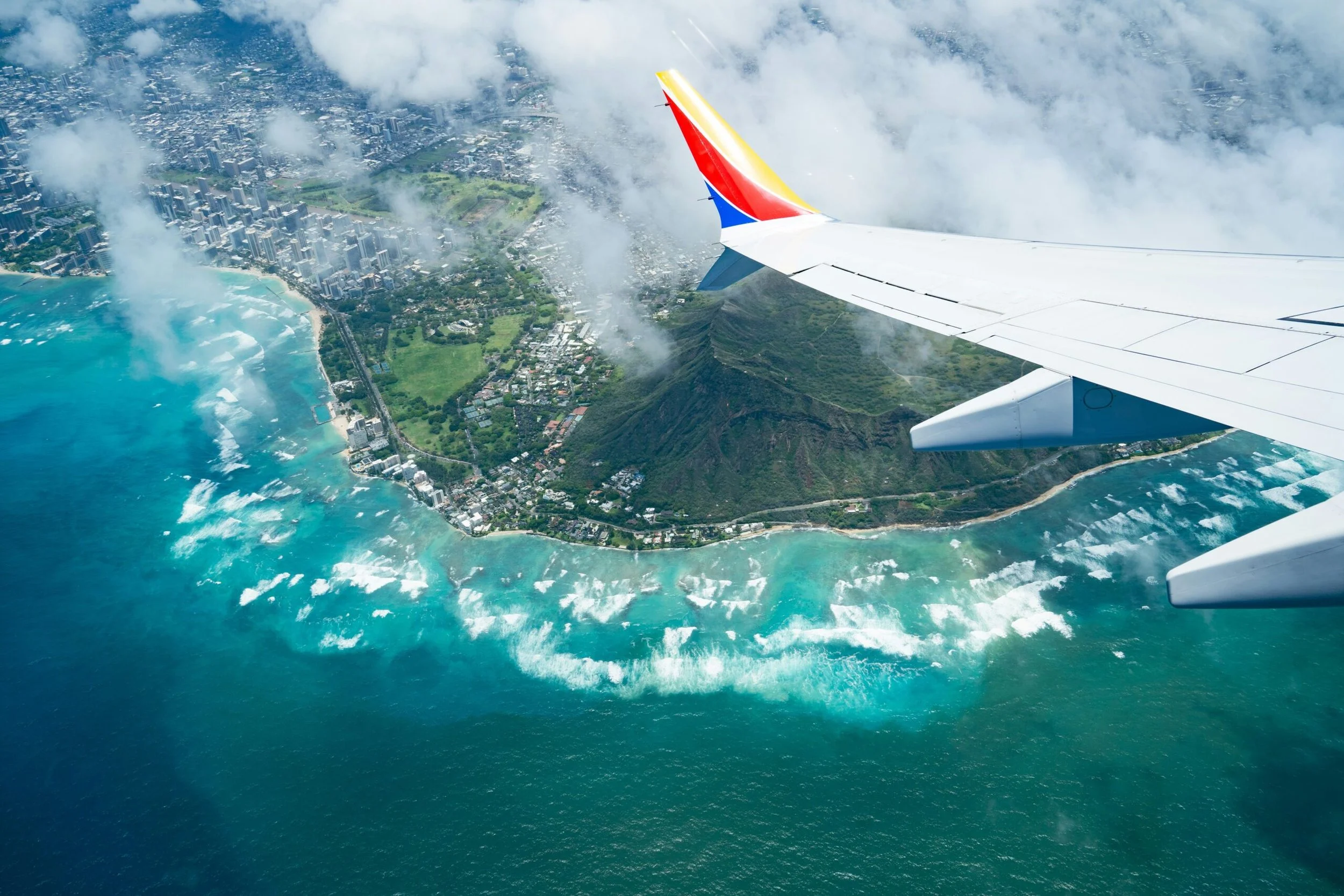
A view of Waikiki from above.
How to Un-Break Hawai’i (in 5 Easy Steps)
In confronting these realities, it is easy to give in to fatalism. Afterall, if an island state of the US cannot erect borders, ban outside buyers, or repeal federal laws, is there anything it can do? The short answer is yes, there are opportunities, but benefiting from them requires abandoning the pretense that conventional mainland housing and tax policies will ever work.
It also means using the specific powers that state and local governments do hold—namely, regulatory zoning, municipal taxation, and public land management—and weaponizing them in the name and in the defense of generational affordability.
Here is what an aggressive, practical, sub-sovereign roadmap could look like:
Step 1: Build the Public Leasehold Firewall
If you cannot ban outside buyers from purchasing private land, then the land must be taken off the private market.
The state and county governments in Hawaiʻi are among the largest landowners in the islands. Instead of selling off public parcels to private developers—who build luxury-style "market-rate" towers that end up being bought by foreign investors and leased back to locals at extortionate rates—the state must build public leasehold housing at scale.
This is the model pioneered internationally by Singapore and championed locally through concepts like the so-called ALOHA Homes: Firstly, the state retains the underlying fee-simple land ownership in perpetuity; next, the state finances the construction of modern, high-quality single family homes and condominium units built on that land; the units are then sold on 99-year ground leases exclusively to local, owner-occupant residents who do not own any other real estate.
Because the buyer is only purchasing the physical structure, and not the hyper-inflated speculative land beneath it, the initial price tag is immediately reduced - in some cases, by up to 50%. Furthermore, lease agreements must include strict equity limits: if an owner decides to sell, they can only sell it back to another bonafide local resident, with any price appreciation tied strictly to inflation or median local wage growth.
This creates a self-contained, perpetually affordable housing sector that functions in tandem with the open market. Celebrities, influencers, and billionaires can keep trading their sprawling mega-mansions among themselves; meanwhile, the nurses, bus drivers, and teachers can keep their communities an economically protected sanctuary where they can build real equity without fear of being outbid by investors, inherited wealth, or Wall Street.
Step 2: Phase Out Extractive Vacation-Rentals
Over the last fifteen years, the rise of short-term rental platforms like Airbnb turned many quiet island communities into decentralized and unregulated boutique hotels. Investors soon realized they could make three to four times as much revenue renting an apartment to tourists by the night as they could renting it to a local family by the month. The economic result was devastating. Thousands of long-term rental units vanished from the market, consequently driving local rents through the roof.
Sub-national governments have the clear, unassailable constitutional power to regulate land use and zoning. In Hawaiʻi, legislative milestones (such as Act 17/SB2919) have explicitly affirmed county authority to phase out and amortize transient vacation rentals in residential zones. To break the grip of short-term rentals over an island’s housing inventory, counties must use this power without flinching. By systematically converting non-conforming, investor-owned short-term rentals back into long-term residential housing stock, local governments can inject thousands of homes back into the market overnight—without pouring a single yard of new concrete or spending a dime of taxpayer money on construction.
Step 3: Flip the Tax Code
Hawaiʻi’s tax system is bizarre: it tends to go easy on passive wealth while it hammers the daily survival of everyday locals.
Much of the state’s revenue comes through the General Excise Tax (GET)—a broad, compounding consumption tax that applies to nearly every commercial transaction, including essential survival goods like groceries, over-the-counter medicine, and shipping services. Because the poor spend every single dollar they earn on GET-eligible transactions, the tax itself acts as a brutal, regressive siphon on working-class liquidity.
Meanwhile, real property taxes—which are controlled entirely by the county governments—are historically among the lowest effective rates in the US. The mismatch has incidentally made Hawai’i an international tax haven for real estate speculators. The ultra-wealthy can buy a $21 million vacation compound on the slopes of Diamond Head, leave it empty for eleven months of the year, and pay a fraction of the property taxes they would pay in California, New York, or Illinois.
To reform this, the tax structure needs to:
Exempt the Everyday Essentials: Eliminate or aggressively rebate the GET on basic groceries, non-luxury residential rent, and essential healthcare. These steps instantly put cash back into the wallets of Hawaii’s worser-off and bottom-most income quintiles.
Implement an Aggressive "Investor and Vacancy" Surcharge: Significantly increase county property tax tiers on non-owner-occupied homes, foreign-owned properties, and vacant speculative parcels/lots. If someone wants to use an island home as a safe deposit box with an ocean view, they should pay a steep luxury tax for the privilege.
Transition to a Land Value Tax (LVT): Shift the property tax calculation away from the building and onto the unimproved value of the land. If a developer builds a high-density, multi-family workforce apartment building, their taxes shouldn't skyrocket. But if a speculator leaves a vacant, overgrown lot or an underutilized parking lot sitting in the urban core of Honolulu, they should be taxed significantly until they build something useful or sell to someone who will.
Step 4: Break Economic Monoculture with Energy and Food Sovereignty
Inequality cannot be fought through housing policy and taxes alone. The wealth drain caused by the freight premium must be addressed. Any money that an island sends to a foreign oil company to fuel its electricity grid, or to mainland mega-farms for frozen meat and produce, is capital that leaves the island forever. To fix the problem, you have to stop the economic bleeding.
One solution is through the cultivation of energy sovereignty. Islands are universally blessed with abundant natural energy: intense tropical sun, reliable trade winds, and geothermal heat in many cases. Transitioning the island’s energy grid to decentralized rooftop solar, municipal battery arrays, and microgrids isn’t just an environmental vanity project; it is a potential pathway towards economic liberation. Proactive steps toward true energy sovereignty will lower baseline operational costs for every single household and business, permanently severing the island's utility bills from the volatility of international oil cartels.
Another meaningful step to consider is food diversification. Across the state, hundreds of thousands of acres of prime agricultural land sits fallow, held in speculative limbo by legacy trusts and multinational real estate holding companies, following the collapse of the industrial sugar and pineapple industries in the late 20th century. The state would do well to use targeted agricultural land taxation to penalize landowners who leave arable soil uncultivated, while creating public leasing programs that offer low-cost, multi-year ground leases to young, local diversified farmers. Producing our own fruits, vegetables, and livestock keeps wealth circulating locally, creates meaningful, dignified green jobs, and dramatically reduces vulnerability to maritime shipping disruptions.
Step 5: Promote "Regenerative" Tourism
For decades, island tourism boards have worshipped at the altar of raw volume. The goal was equally simple and destructive: bring in more visitor arrivals this year than last year, every year.
Pursuing volume has resulted in environmental and cultural catastrophe: millions of tourists strain public beaches, overwhelm aging utility infrastructure, and turn local roads into gridlock. The lion’s share of any revenue created by tourism flows directly to mainland-owned airline carriers, multinational hotel chains, and corporate booking platforms. The local community is left with their leftovers: the trash, the traffic, and a sea of minimum wage service jobs. Islands cannot afford high-volume, low-margin tourism. The carrying capacity of the land simply will not bear it. Therefore, if it is meant to survive, the visitor industry must shift toward regenerative, high-yield tourism.
To begin, Hawai’i should implement mandatory "green user fees" for out-of-state visitors, targeted Transient Accommodations Taxes (TAT), and premium reservation surcharges for state parks and cultural sites. Money generated from taxing tourism must be exclusively earmarked for the benefit of the people, the environment, or both. Those revenues must be legally insulated so they cannot be diverted into general state coffers, but instead channeling them directly into municipal infrastructure repairs, environmental restoration, and native habitat protection.
Furthermore, the tourism industry must be required to deliver some community benefit. The state should force commercial resort operators to enter into binding community covenants that mandate living wages, local hiring guarantees, and local agricultural procurement quotas. If a luxury resort wants to advertise "farm-to-table" island dining, they should be legally bound to buy their produce from local farmers, not have it flown in from a distribution center in California.
The Path Forward: Containing Capitalism
The fundamental mistake we make when thinking about island economics is assuming that what works on a massive, open continent will somehow work on a finite, fragile land mass in the middle of a vast ocean. On a continent, the market can afford to be messy, sprawling, and loosely regulated, because there is always another valley, another highway, and another horizon. On an island, operating by a continent’s rules is consistently a recipe for disaster.
When land on an island is treated like a commodity to be bought and sold on the open global market, it isn’t an example of free enterprise. Commodifying what everyone needs in order to live effectively begins a slow-motion exodus of the local population. Tethering an isolated community's cost of living to global capital, and their wages to an extractive service monoculture, produces extreme inequality. Inequality is not an incidental or accidental side effect. It is the inevitable mathematical outcome.
Changing this dynamic does not require an impossible political revolution, nor does it require pretending that the rest of the world does not exist. It does require intellectual honesty, however. It requires recognizing that an island is an extraordinary, delicate, closed economic circuit.
If we want our island communities to remain living, breathing homes for the people who belong there—rather than curated theme parks for the global elite—we have to stop treating them like small pieces of a continent they never belonged to.
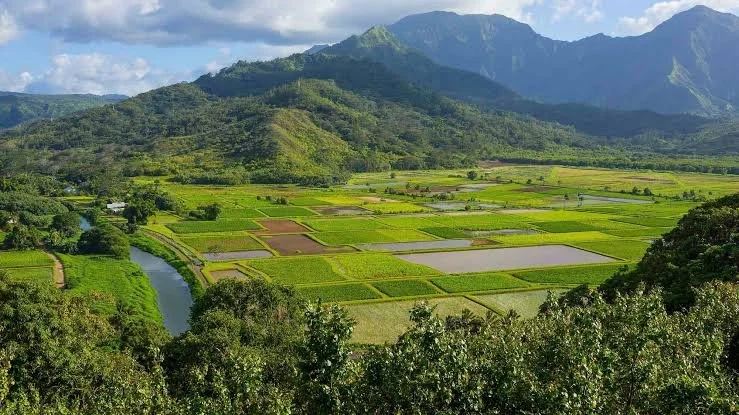
Hanalei Valley, north shore of Kaua’i.
