
ʻO KA HEWA PAUʻOLE: Recurring Patterns & US Foreign Policy
History’s most perennial truths reveal themselves not through events per se, but through patterns. Patterns define human history because they also define human nature. Our tendency to repeat patterns despite ourselves springs out of a time-tested biological aptitude to do what works. If we keep doing what works often enough, we tend to extract something of value or we increase some meaningful advantage. In time, well-managed patterns can become skills or talents. Poorly-managed ones can metastasize into addictions, or systems of abuse.
If we reframe history by thinking of the Hawaiian Kingdom’s 1893 overthrow not just as an isolated event but as a strategic beta test that the US would pattern and perfect over the next 130+ years, then military interventions in countries like Guatemala, Nicaragua, Chile, Venezuela, Iraq, and Iran seem less about global stability and more like a very specific and uniquely American foreign policy "playbook".
The Silent Partner
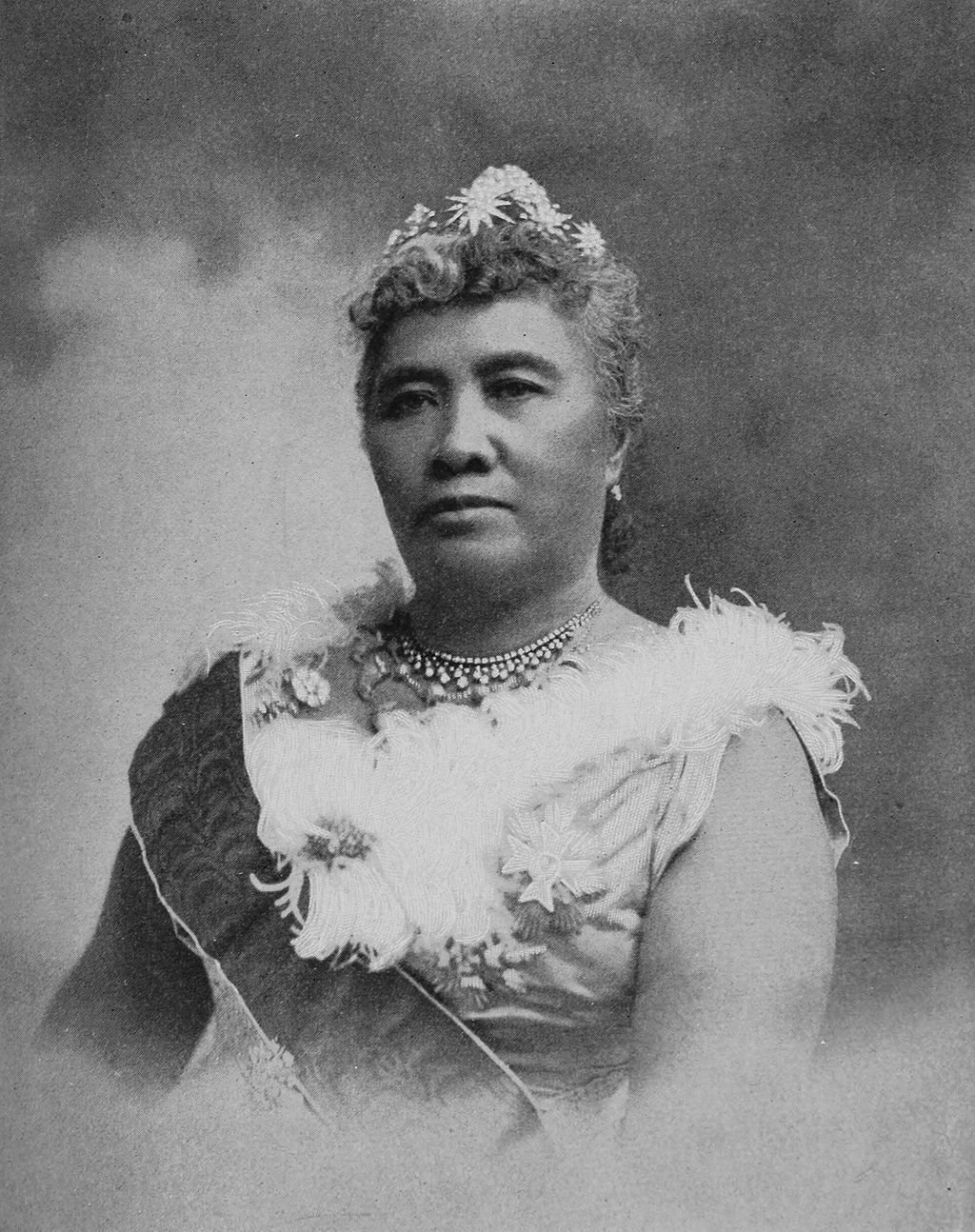
Portrait of Lydia Liliʻu Loloku Walania Kamakaʻeha - Queen Lili’uokalani; Hawaii’s last Regent. Image: Hawai’i State Digital Archives
Imagine you’re Queen Liliʻuokalani. The year is 1893. It is the 17th of January - an all but unremarkable Tuesday morning in Honolulu. You have a small but loyal resident force, garrisoned at ‘Iolani palace. Without notice, the USS Boston - a warship - drops anchor, and fully-armed US Marines march into the streets. They're advancing towards your royal residence and critical government buildings. Yet they don't fire a single bullet. They don't even say they are there to help the so-called Committee of Safety who compelled their arrival and instigated this historic aggression. The Marines do not become violent, even though it looks like they will at any moment. But they won't; they don’t need to, and the Committee knows this. The Marines’ immediate presence (and the US military’s reputation, generally) speaks loudly what verbal threats don’t have to.
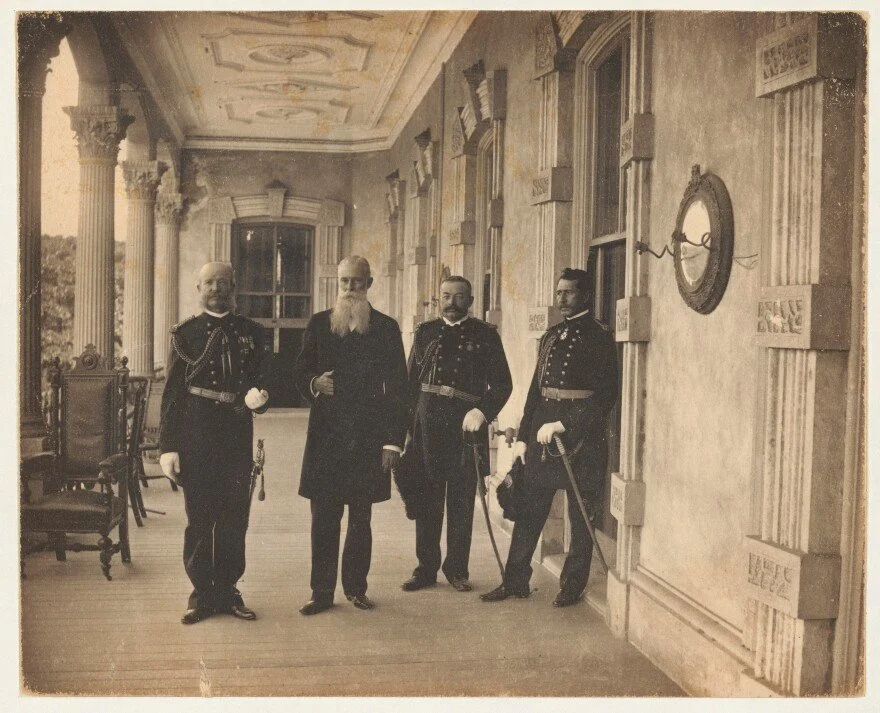
From L-R: Henry Ernest Cooper - a lawyer and member of the Committee of Safety who read the proclamation that declared the end of Queen Lili’uokalani’s government on January 17, 1893; Sanford Dole - 19th century pineapple magnate and first (and only) “President of the Republic of Hawai’i” following the overthrow; John H. Soper - Adjutant General who controlled the Provisional Government’s militia forces, responsible for the strategic and operational command of anti-royalist forces during the overthrow; William R. Castle - prominent lawyer and key member of the Committee of Safety who served on the Provisional Government’s Executive Council. Image: Hawai’i State Digital Archives.
Historians call it a Coup de Main. The violent potential of US military action provides the psychological leverage necessary to paralyze the Queen’s government. The Blount Report - a US House of Representatives Foreign Relations Committee analysis of the overthrow and its origins - suggests that the mere expectation of US support was enough to make the overthrow a real possibility. The Marines didn’t need to get violent because the US didn't have to conquer Hawai’i. They just needed others to lean on the political scales hard enough for control of the islands to tip to the US.
This use of American military leverage did not go unnoticed, or underestimated. Instead, it became a keystone assumption of how powerful US military capability was in the minds of other countries.
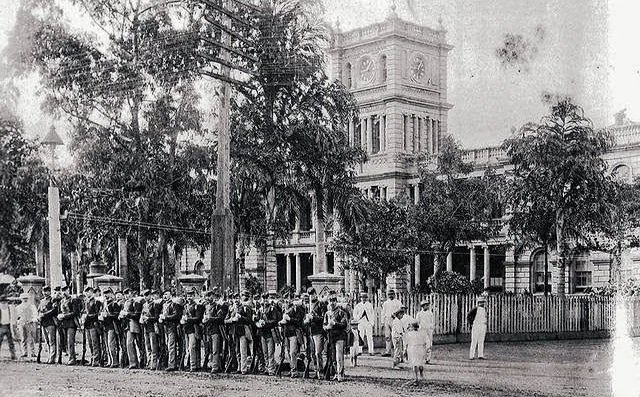
Image: Hawai’i State Digital Archives. US Marines, deployed by the USS Boston, in formation along King St., Honolulu, Hawai’i; 1893. Image: Hawai’i State Digital Photo Archives
Power Grabs, Public Money, and Private Armies
The first few chapters in America’s regime-change playbook were mostly written at the expense of Native Hawaiians, Native Americans, and historic Mexico. But these tactics didn’t come out of nowhere. In truth, American foreign policy was following a formula of political control developed by the originators of hostile corporate intervention in the modern era: the UK and France.
Long before the USS Boston arrived in Honolulu, European powers were using chartered companies as a sort of private-public military hybrid. The most notorious example is the British East India Company. At the Battle of Plasseyin 1757, an EIC officer named Robert Clive— a corporate executive with a personal army at his disposal—overthrew the Nawab of Bengal. Much like the sugar barons in Hawai'i, the EIC claimed they were "protecting trade." In reality, they created a de facto government, corporately subsidized it, and gave it effective control over the entire subcontinent of India. To entrench control, they created "subsidiary alliances": local rulers would be offered "protection" from their rivals if they paid for a British-led defense. Eventually, rulers who opted in would go broke, and the EIC would step in to seize the land and its resources.

Similarly, in the mid-19th century, the French government often used the excuse of “protecting” Catholic missionaries or French merchants to send in their Navy. In Vietnam, "punitive expeditions" to protect trade interests quickly turned into full-blown colonial takeover. Like the US in Hawai'i, the French would align with a "friendly" local faction or claim they were “restoring order” to justify either martial law or a permanent military presence.
In Africa, the French West Africa Company operated with similar autonomy. There was little to distinguish between a corporate business meeting and what was effectively a military strategy session. State-sanctioned corporations acted as the "tip of the spear”, destabilizing the local order to a point when the French national government could swoop in and claim the need to "maintain stability".
The common thread linking these events—from the EIC in India to the French in Vietnam, and the US in Hawai'i—is the model: It begins with a commercial entity (e.g. spices, sugar, tea, coffee, rubber, petroleum, etc.) that becomes so lucrative that it dictates national foreign policy. A "crisis" usually follows. Profits are threatened. The national military is then called in to "save" it from any further loss, for the sake of national security.
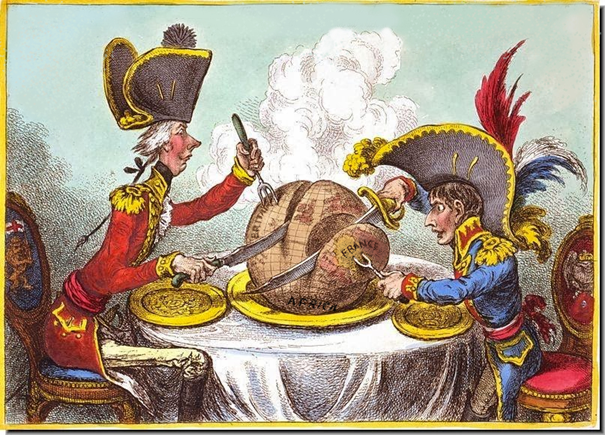
The Plumb-pudding In Danger, or, State Epicures Taking Un Petit Souper, created by renowned English caricaturist James Gillray
While it was no secret that the British and French wanted to build their respective empires, the US’s stated aims became much subtler. After World War II, US administrations seemed to prefer leaving a "friendly" local government in charge rather than raising the Stars and Stripes over newly acquired territory (not counting any of the 750 to 800 US military installations located in at least 70 foreign countries). But whether it’s a company executive in a red coat and powdered wig, a high-level bureaucrat in a three-piece suit, or a clandestine CIA agent with a briefcase full of cash, the pattern’s strategy is clear: corporate influences become the groundwork for military intervention.
“If It Ain’t Broke…”: The 20th & 21st Centuries
The 20th century and the Cold War bring new levels of sophistication to this political manipulation. By the 1900s, the US had made the same levels of political destabilization and civil disorder look "internal”.
In the 1954 Guatemalan coup d’etat, the US didn't deploy a massive invasion force. They didn’t need to. Instead, they funded a small rebel group and used psychological warfare to make the Guatemalan military believe a large-scale US invasion was imminent. Like in Hawai’i, the goal was to protect corporate interests—in this case, the United Fruit Company. Stephen Kinzer argues in his book Overthrow that the pattern of identifying local groups who align with US economic interests, and then providing just enough military "oomph" to ensure they win (the exact same methods that handed control of Hawai’i to Washington DC), becomes the CIA’s standard operating procedure for the next 100 years.
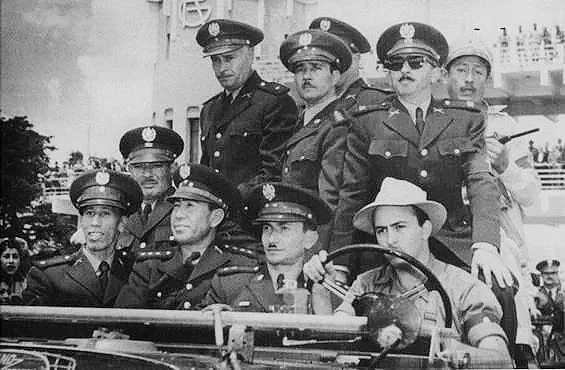
Colonel Carlos Castillo Armas and his military supporters enter Guatemala City following the 1954 CIA-backed coup that ousted President Jacobo Árbenz, marking the transition to military rule after overthrowing the democratically elected government. Image: Encyclopedia Britannica
By the 2000s, heavy-handed military action operates according to different rules of psychology and justifiability. In some ways, making war is more harmful to national reputation now than at any time in the past. The days of landing US troops in the capital cities of "troublesome" nations may have ended with the 2003 invasion of Iraq. Instead today, we see a version of interventionism that selectively mixes the menace of Gunboat Diplomacy with aspects of subversive economic influence.
For example, US recognition of Juan Guaidó over Maduro as the legitimate leader of Venezuela in 2019 eerily mirrored US Minister John L. Stevens’ 1893 recognition of the US-endorsed "Provisional Government" over Hawaii’s legitimate leader - Queen Lili’uokalani. The similarity between these events betrays the time-tested pattern at work: using US diplomatic weight to delegitimize a sitting leader, while positioning strategic military assets nearby to reinforce the message.
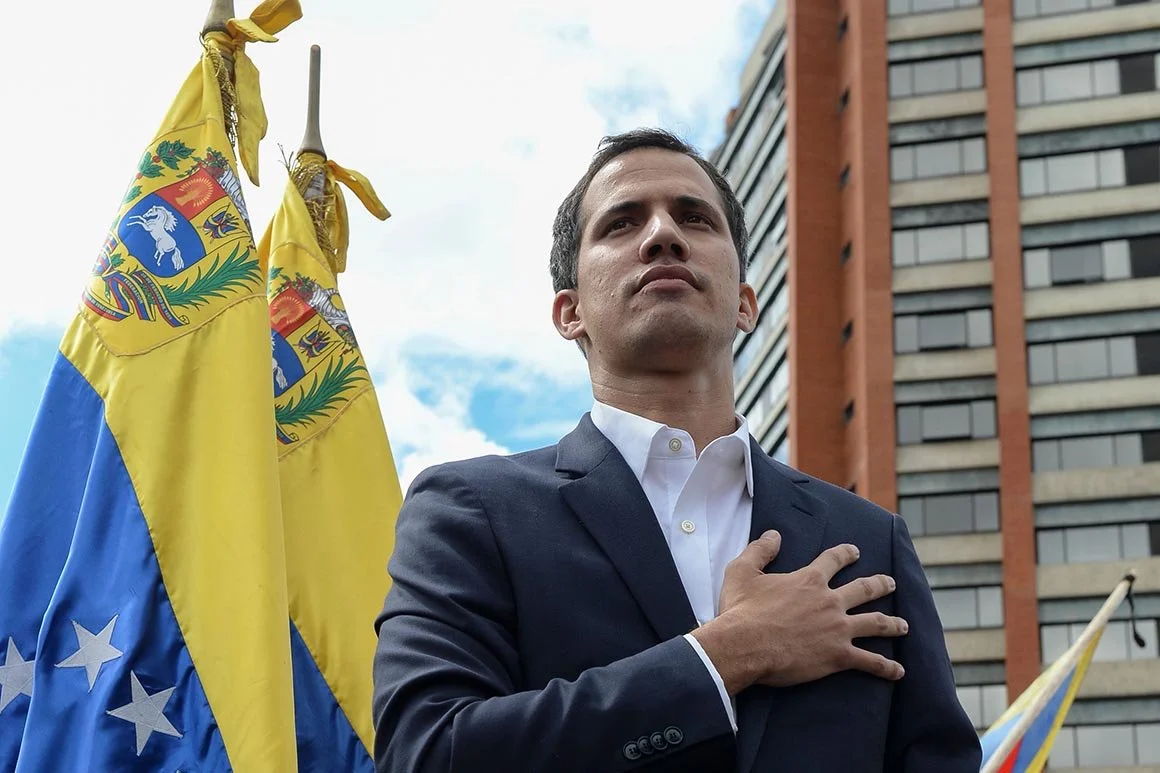
Juan Gerardo Antonio Guaidó Márquez,Venezuelan politician and opposition figure, affiliated with the social-democratic party Popular Will. Credit: AFP/Getty Images
In 2026 Iran, the strategy is more blunt: apply maximum pressure through an intimidating show of force. The inherent goal isn’t about manifesting the regime’s quick fall. Instead, the focus is to bring about a slow-motion collapse. Heavy economic sanctions and strategic military posturing (like the 2020 strike on Soleimani), creates a unique political environment where the internal order within the Ayatollah’s government could either fold or be overthrown from within. In the second scenario, the US would likely let a "friendly government” take the reins, thus echoing the events of 1893 Hawai’i.
Be Careful What You Wish For…
Because politics never happens in a vacuum, political actions will nearly always give rise to reactions (or retributions). Accordingly, US foreign-policy tactics are not without their side effects. The consequences of these side effects are rife with costly, unintended complications.
Every time tactics from this playbook are used, the credibility and integrity of international law is undermined. When the world consistently sees the US bypassing United Nations prerogatives to trigger regime change, other regional powers tend to adopt similar justifications to do the same in their own parts of the world.
In Hawaii, the 1893 overthrow led to US annexation, but it also created deep, lasting cultural resentments that still fuel Hawaiian sovereignty movements today. In the middle east - especially in places like Iran - US pressure often backfires by giving the people and the regime a common enemy to rally against. The blowback ironically makes hostile governments even harder to dislodge. And even though protecting US economic interests with the military is still a standard diplomatic American foreign-policy exercise (like sugar in the 19th century, crude oil in the 20th, or “rare earth” minerals today), the long-term cost of maintaining military dominance and dealing with regional instability usually ends up being far more expensive than whatever the US was trying to "save" in the first place.
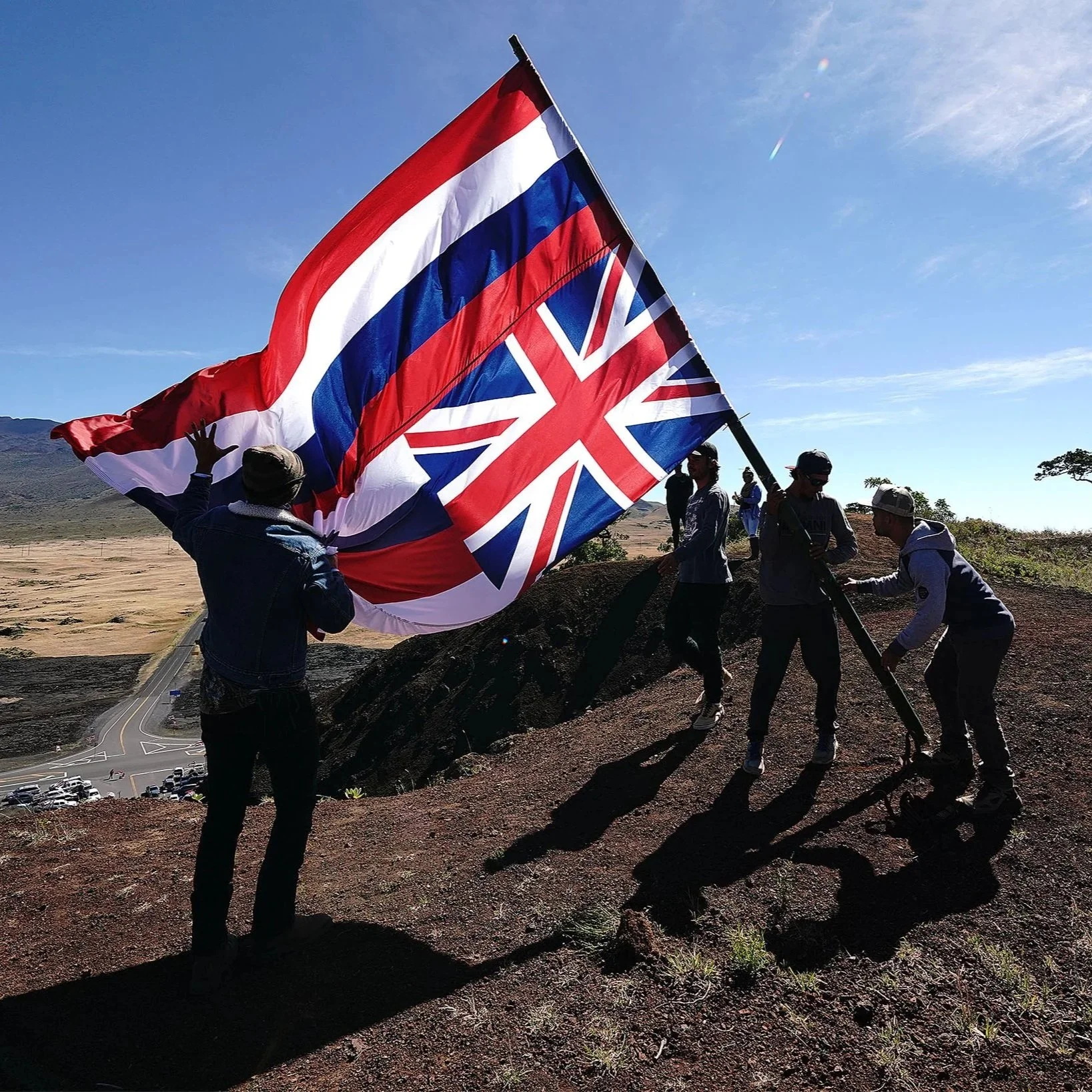
Mauna Kea Protectors. Credit: Cory Lum/Civil Beat
Patterns have their pitfalls. Like causes and effects, one always comes with the other; they are inextricable. So whether it's the USS Boston in 1893 Honolulu or the USS Gerald Ford off the coast of Venezuela in 2025, the DNA of the action is the same: the use of military "posturing" to embolden a friendly group and demoralize an unfriendly one.
In psychology, patterns that consistently work against one's best self-interest are commonly referred to as “self-defeating” or “self-sabotage”. In politics, it’s a highly effective short-term strategy that almost always comes with extraordinarily harmful generational costs.
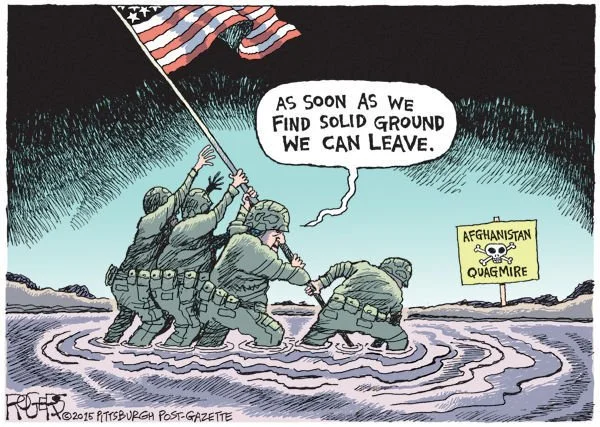
Credit: Rob Rogers, 2015; originally published in the Pittsburgh Post-Gazette
Sources
Daws, G. (1968). Shoal of Time: A History of the Hawaiian Islands.
Kinzer, S. (2006). Overthrow: A Century of Regime Change from Hawaii to Iraq.
Dalrymple, W. (2019). The Anarchy: The Relentless Rise of the East India Company.
Robbins, N. (2006). The Corporation that Changed the World.
Popkin, J. D. (2015). A History of Modern France.
Priestley, H. I. (1938). France Overseas: A Study of Modern Imperialism.
Liliʻuokalani. (1898). Hawaii's Story by Hawaii's Queen.
Congressional Research Service. (2020). U.S. Sanctions on Venezuela: Main Provisions and Policy Issues.
